
Attachment Based Relationship Tips
Looking to strengthen your relationship? Our blog offers expert relationship tips rooted in attachment theory and Emotionally Focused Therapy. Learn how to identify your attachment style, communicate more effectively, and foster emotional safety with your partner. From overcoming conflict to building deeper trust, our practical advice and tools, created by couples therapist Julie Menanno, are designed to help you move toward a secure and fulfilling connection. Dive in and start transforming your relationships today!
What Is Attachment Theory? The 4 Attachment Styles in Relationships
Attachment theory helps explain why some relationships feel safe, connected, and easy to repair, while others feel stuck in the same painful cycle. In adult relationships, attachment shows up in what triggers us, how our bodies react to disconnection, and the strategies we use to get safe again. Understanding attachment can help you stop seeing your partner as the enemy and start seeing the real problem more clearly.

When Is It Time to Seek Professional Support for Your Relationship?
Not every couple seeks support because they are in crisis. Sometimes the clearest sign is simply repeating the same painful pattern, feeling stuck in distance, or wanting more trust and connection. Here are 8 signs it may be time to seek relationship support.

What to Do When You’re Triggered by Your Partner
When your partner triggers you, the urge to react can take over fast. This relationship trigger toolbox helps you slow down, regulate your nervous system, understand what is happening inside you, and communicate in a healthier way that supports emotional safety and connection.
The DEAR MAN Method for Relationship Conflict
Most conflict isn’t happening because you “can’t communicate.” It happens because your nervous system gets activated and you lose structure. You start proving, defending, mind-reading, or stacking old hurts, and suddenly the real issue disappears.
DEAR MAN is a simple framework you can memorize and lean on when you need to ask for something, set a boundary, or address a pattern, while still protecting the relationship.
What Makes a Relationship Thrive (and What Makes It Fail)
Most relationships don’t break because love disappears. They break because emotional safety disappears—usually through unmet attachment needs, unhealed wounds, and negative cycles that keep partners from finding each other again.

Anxious Attachment, Codependency, and the Work of Healing
Anxious attachment and codependency are not flaws or weaknesses. They are nervous system strategies developed to manage pain and feel safe. Healing begins when feelings are allowed instead of acted out.
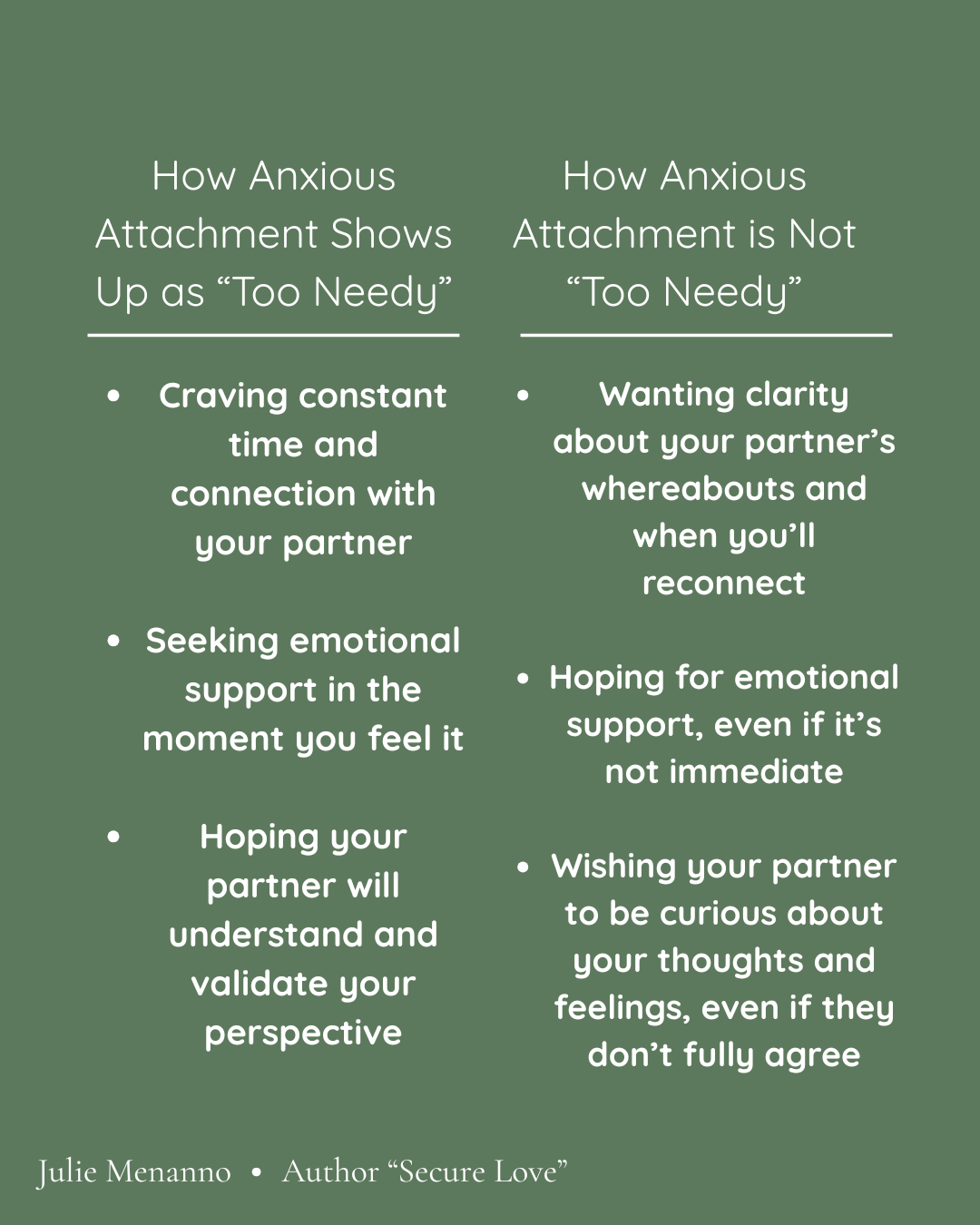
How Anxious Attachment Shows Up as “Too Needy” (and Why It’s Not)
Anxious attachment is often misunderstood as neediness. In reality, it reflects unmet attachment needs for clarity, emotional responsiveness, and connection. Understanding this difference is key to building secure relationships.

The Core Difference Between Anxious and Avoidant Attachment
Anxious and avoidant attachment styles may appear completely different, but they share the same core problem: insecurity and avoidance of painful feelings. Understanding this difference is key to healing and building secure attachment.

How to Talk With Your Partner About Emotional Blocks (and Build a Secure Relationship)
Emotional blocks are not the problem in relationships. The problem is not knowing how to talk about them. Learn how couples can discuss their protective patterns with curiosity, vulnerability, and emotional safety to build a more secure relationship.

Let’s Talk Love- A Real Love Ready Podcast
In this episode of Let’s Talk Love, Robin sits down with therapist, author, and attachment expert Julie Menanno to explore how we can create relationships that feel safe, connected, and enduring.

Terra’s Baddy Club
Join Terra Newell and Julie Menanno as they delve into the transformative power of self-work and emotional regulation.

Digital Social Hour
On this episode of Digital Social Hour, we dive deep into the science of love, attachment, and communication with therapist and author Julie.

Escaping the Negative Cycle: Before, During, and After a Hard Conversation
Negative cycles keep couples stuck in the same fights. Here’s Julie’s Before/During/After roadmap—with simple scripts for staying connected and repairing after disconnection.
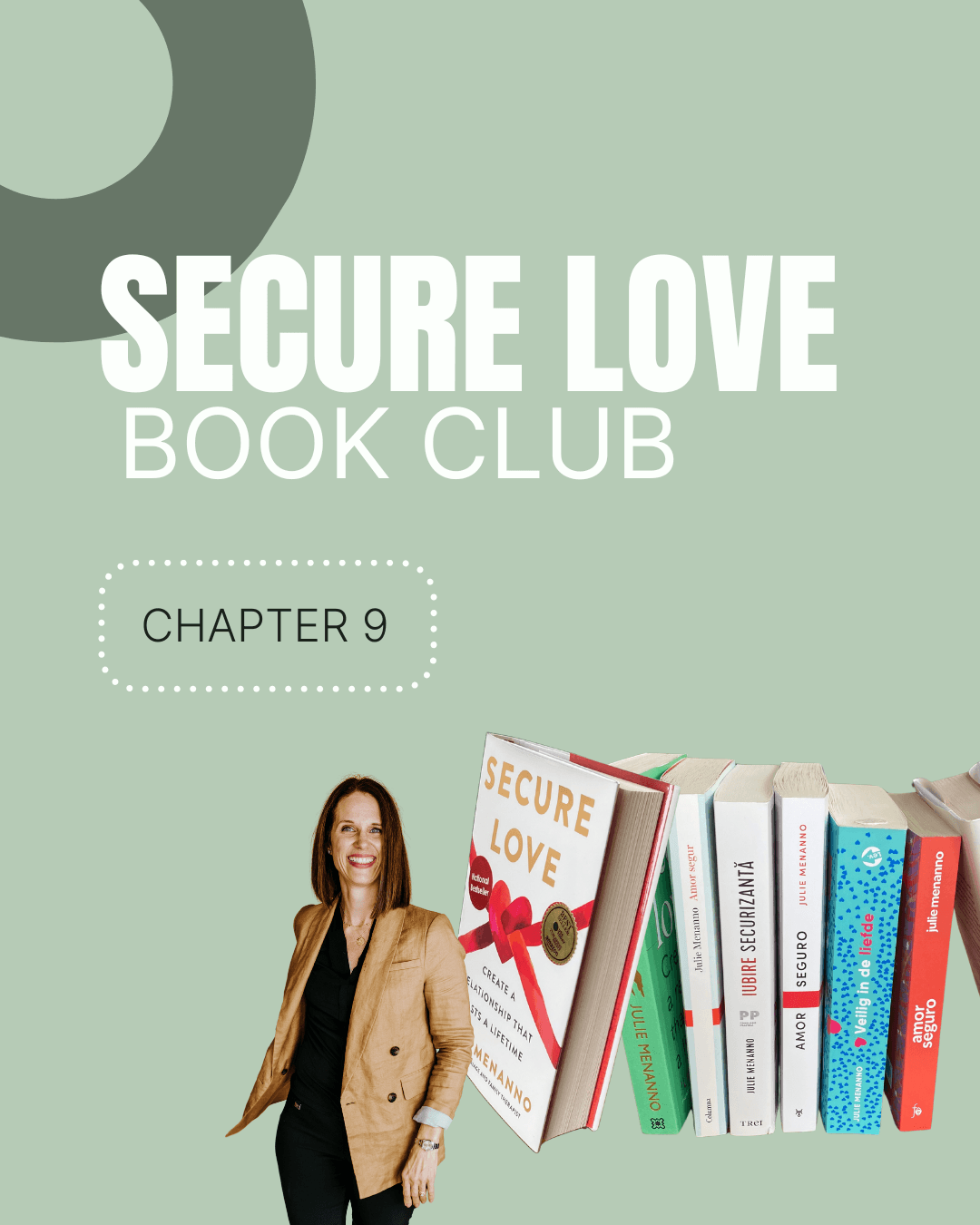
Chapter 9: Attachment Injuries and Repair
In Chapter 9 of Secure Love, we explore attachment injuries—what they are, how they form, and what it takes to repair them. These moments of relational pain shape our protective strategies, but they also offer an opportunity for deeper connection if we’re willing to stay emotionally engaged.
What’s Really Behind All That Anger in Your Relationship
If you feel stuck in anger or resentment and it’s affecting your ability to connect, this session will help you understand what that anger is really trying to tell you and what to do with it.

The Secure Love Podcast: Real-Time Couples Therapy in Action
In The Secure Love Podcast, follow real-life couple Melissa and Drew through 20 unscripted coaching sessions. With expert commentary and free homework downloads, you’ll learn how attachment theory can help you transform conflict into connection.

Chapter Eight: Repairing After the Cycle
Repairing after a negative cycle is one of the most powerful skills in a relationship. In Chapter Eight of the Secure Love Book Club, Julie Menanno guides readers through the process of emotional repair—what it looks like, why it’s hard, and how to make it meaningful.

Introduction to Emotionally Focused Couples Therapy
Emotionally Focused Couples Therapy (EFT) helps partners break negative cycles and build secure bonds using the science of attachment. Learn how EFT works and why it’s so effective.

Helping Your Partner Emotionally Engage
Emotional engagement is at the heart of connection, but many partners struggle to share their inner experience. This post offers gentle, practical tools to support your partner in opening up without pressure or intrusion.
What If It’s Not Just Discomfort, But Disgust?
In this session, Julie explores how emotional disgust, toward our own feelings or our partner’s, can silently block intimacy and emotional engagement. A powerful conversation with real-life examples and tools for healing.
Get Secure Relationship resources and insights, delivered weekly.
VIDEOS
VIDEOS


In this week’s group, Julie dives into healing attachment wounds and why old pain can make “small” moments feel huge. She breaks down what an attachment wound really is: not just a big event, but often a thousand paper cuts of emotional abandonment that teach your nervous system, “My needs won’t be met.”
You’ll learn Julie’s layered model for why conflicts escalate: the original issue, the unmet need underneath it, the relationship wound that adds fear and grief, and the childhood echoes that make the present feel like the past. Julie then walks through the three essentials for healing: healing conversations (focused on impact, not intention), new behaviors (because trust requires new experiences), and time (because your nervous system has its own timeline).
During the Q&A , we learn how to do grief work for childhood wounds, what “re-parenting” can look like in a way that feels authentic, and how to stay with emotional pain without getting flooded.