
Attachment Based Relationship Tips
Practical, attachment-based tools from therapist Julie Menanno. Understand your patterns, calm the conflict, and build real emotional safety with your partner.
Browse by topic
New here? Start with these



3 Tips to Help Your Anxious Partner Feel More Secure
Anxious partners feel more secure when their relationship needs are met. Learn three practical ways to support your partner in feeling safe, valued, and emotionally connected.

What Is Attachment Theory? The 4 Attachment Styles in Relationships
Attachment theory helps explain why some relationships feel safe, connected, and easy to repair, while others feel stuck in the same painful cycle. In adult relationships, attachment shows up in what triggers us, how our bodies react to disconnection, and the strategies we use to get safe again. Understanding attachment can help you stop seeing your partner as the enemy and start seeing the real problem more clearly.

Anxious Attachment, Codependency, and the Work of Healing
Anxious attachment and codependency are not flaws or weaknesses. They are nervous system strategies developed to manage pain and feel safe. Healing begins when feelings are allowed instead of acted out.
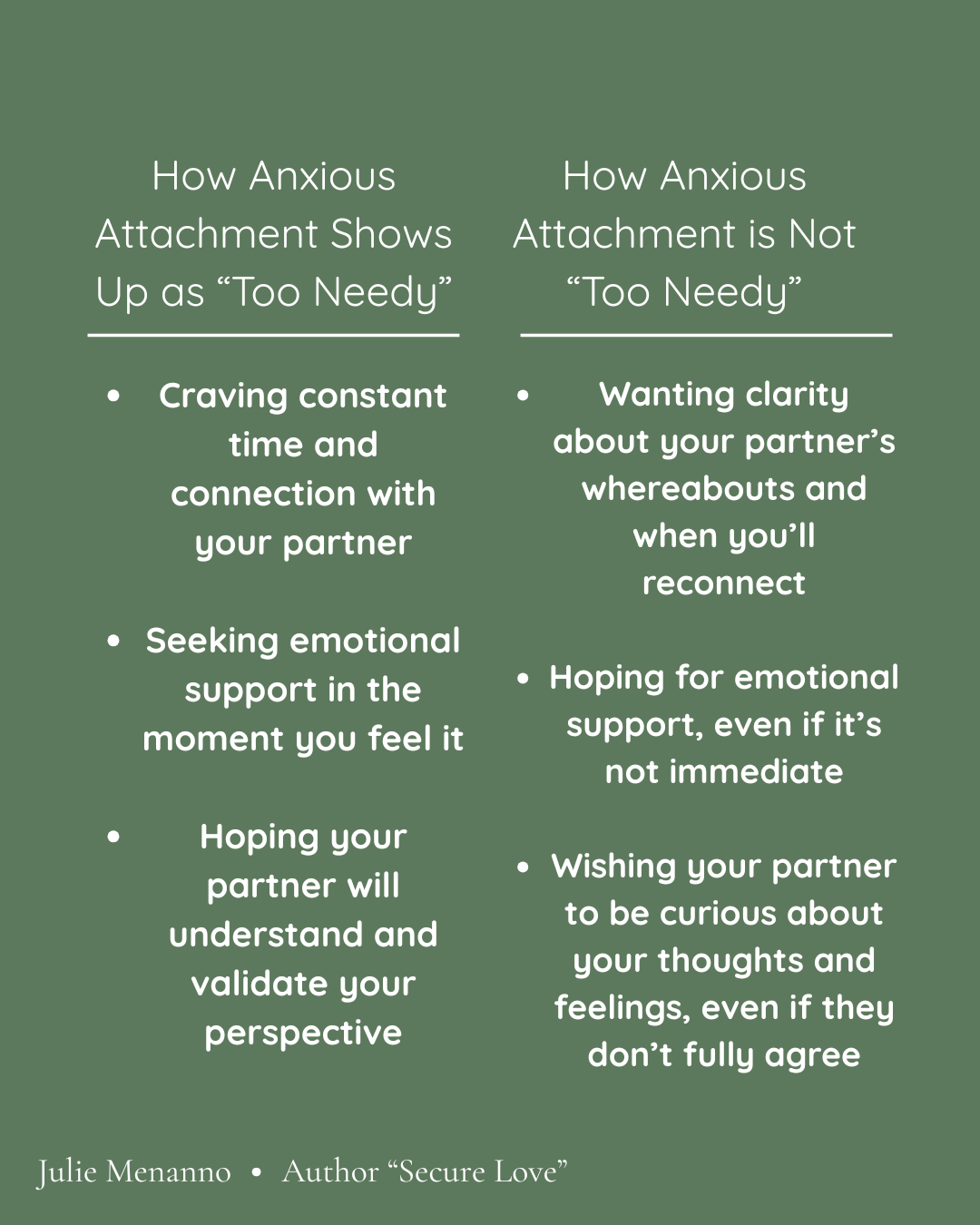
How Anxious Attachment Shows Up as “Too Needy” (and Why It’s Not)
Anxious attachment is often misunderstood as neediness. In reality, it reflects unmet attachment needs for clarity, emotional responsiveness, and connection. Understanding this difference is key to building secure relationships.

The Core Difference Between Anxious and Avoidant Attachment
Anxious and avoidant attachment styles may appear completely different, but they share the same core problem: insecurity and avoidance of painful feelings. Understanding this difference is key to healing and building secure attachment.

The Secure Love Podcast: Real-Time Couples Therapy in Action
In The Secure Love Podcast, follow real-life couple Melissa and Drew through 20 unscripted coaching sessions. With expert commentary and free homework downloads, you’ll learn how attachment theory can help you transform conflict into connection.

Reaching and Responding: Chapter 7 of the Secure Love Book Club
Reaching and responding are the smallest, most powerful moves in a relationship—and the ones most likely to be misunderstood. Chapter 7 helps you spot the reach, respond with intention, and change the entire trajectory of a moment.

How Do Different Attachment Styles Approach Making Sacrifices for the Good of the Relationship?
Anxious partners over-sacrifice. Avoidant partners resist change. Secure partners give for the greater good. Learn how attachment shapes relationship sacrifices.

How to Recognize Your Attachment Style in Everyday Reactions
The emotional patterns you repeat in your relationship often stem from your attachment style. This post outlines common signs of anxious or avoidant attachment.

Testing Your Partner’s Love?
Do you find yourself constantly testing your partner’s love? This blog explores why reassurance never feels like enough and how you can begin to build real trust—from the inside out.

How Personal Anxiety Can Impact Your Relationship
Trying to control your environment—like keeping a spotless house—can sometimes be a way to manage inner anxiety caused by relationship disconnection. But when that strategy backfires, it can create more of the very disconnection you’re trying to avoid. This post explores how personal anxiety shows up in relationships, and how couples can break the cycle.

Your Attachment Style Has So Much to Say…
Each attachment style holds a story—about fear, need, and connection. When we give those stories words, we begin the process of healing, connection, and secure attachment.

Navigating Relationship Challenges: Answers to Common Questions
Understand how attachment styles, boundaries, and emotional security shape your relationships. Learn how to distinguish between anxious fears and intuition, repair negative cycles, and move forward with clarity.

Why Do Those with Anxious Attachment Do That?
Anxious attachment behaviors often stem from deep fears of abandonment. Learn why these behaviors feel safe and how to shift toward healthier relationship patterns.

Insecure Attachment Styles and How They Keep You Stuck
Anxious, avoidant, and disorganized attachment styles often keep partners stuck in negative cycles. Learn how to break free by improving communication, self-awareness, and emotional regulation.

Common Experience of Anxious Partners: The Sense of Over Responsibility
Many anxious partners struggle with over responsibility, feeling the need to control everything to feel safe. Learn how to balance expectations, release control, and build a healthier relationship dynamic.

Emotional Intimacy: What It Looks Like (for Men) and How Avoidant and Anxious Partners Block It
Both avoidant and anxious partners block emotional intimacy in unique but equally intense ways. By understanding these dynamics, couples can begin to break the negative cycle and build a more secure, emotionally connected relationship.

Anxious Attached Partners Need Emotional Validation To Feel Close. Without It, They Can’t Thrive In the Relationship.
Anxious attached partners need emotional validation to thrive—learn how to provide it and create a secure, connected relationship.

Understanding Anxious Attachment: Signs, Causes, and How to Heal
Anxious attachment is often driven by fear of abandonment and a strong need for emotional validation. This post explains the roots of an anxious attachment style, how it impacts relationships, and the practical steps that help both partners build more security.

Anxious Attachment 101 Chapter Four: How to Heal Anxious Attachment
Learn how to heal anxious attachment with self-regulation, co-regulation, and emotionally safe communication, fostering growth and connection in your relationships.