
Attachment Based Relationship Tips
Practical, attachment-based tools from therapist Julie Menanno. Understand your patterns, calm the conflict, and build real emotional safety with your partner.
Browse by topic
New here? Start with these



Attachment Needs: The List, and Why Yours Go Unmet
An excerpt from Secure Love. The full list of attachment needs, why some partners are more sensitive to certain ones, and what to do when a need goes unmet.
How to Heal Insecure Attachment Without Waiting for Your Partner
You can heal an insecure attachment without waiting for your partner to change. Learn what to look for in therapy and how to do the work if therapy isn't available.
Why Protesting in Your Relationship Keeps You Stuck
Protesting when triggered keeps couples stuck. Learn why it happens and how to assert your needs with emotional safety so you finally feel seen and heard.
Afraid of Conflict? How to Do It in an Emotionally Safe Way
If conflict overwhelms you, learn where the fear comes from, the difference between a criticism and a concern, and tips for emotionally safe conflict.

Are You Strong Enough to Feel Your Feelings?
When your partner can't show up, grief work is the way through. Therapist Julie Menanno walks anxious partners through leaning into the hurt to find calm.

The Anxious-Avoidant Couple: A Secure Love Excerpt
Most distressed couples get stuck in an anxious-avoidant pattern. This excerpt from Secure Love explains the balancing act, its cost, and why both partners stay stuck.

To Be Known: The Heart of Real Intimacy in Love
Real intimacy is wanting to know all of your partner's inner world, not just the surface. Julie Menanno on what it means to know and be known.

What Sex Means by Attachment Style, and the Cycle It Creates
Sex carries attachment meaning: closeness, reassurance, autonomy, worth. Learn what sex often means for each attachment style and the cycle mismatches create.
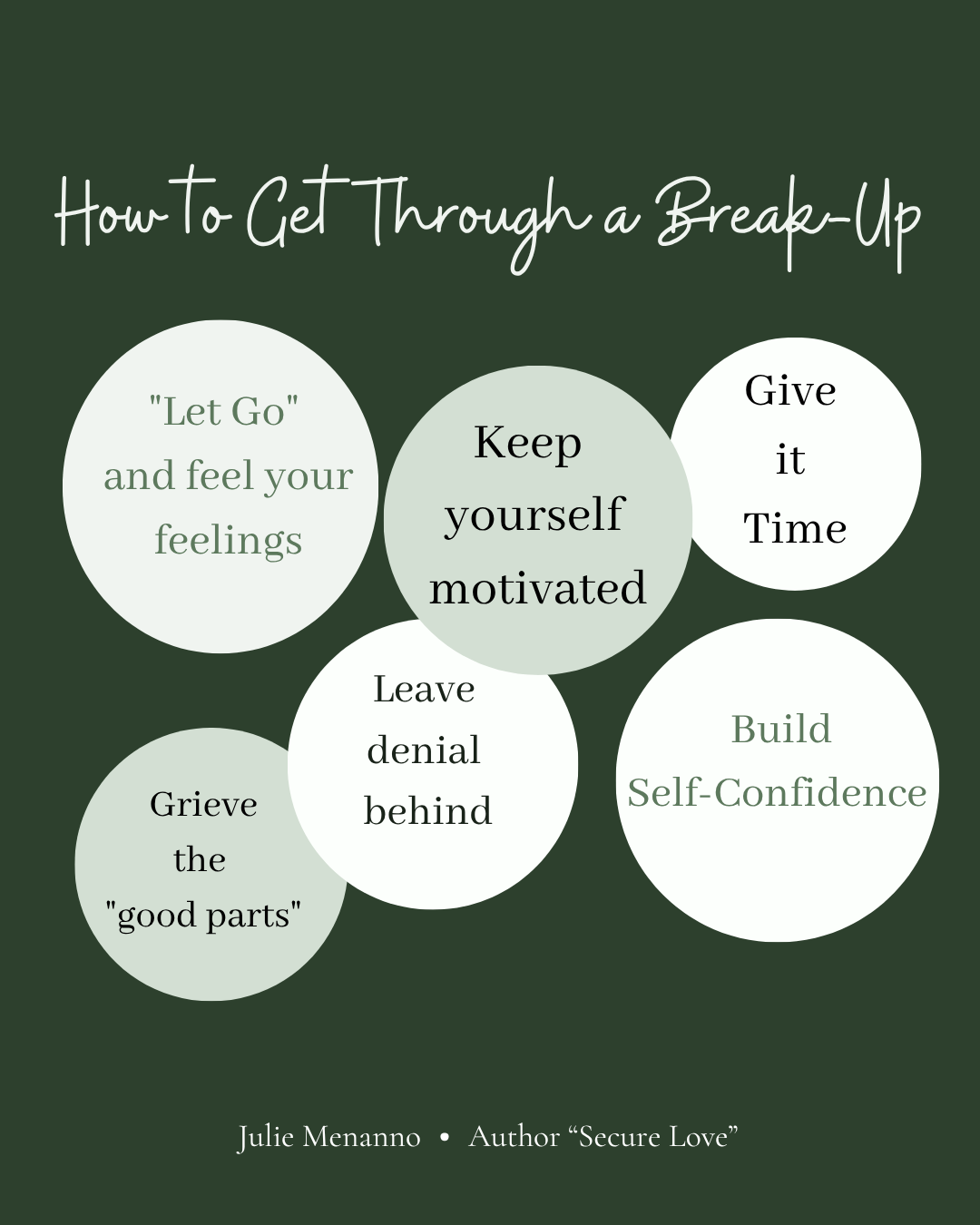
How to Get Through a Break-Up: A Therapist's Guide to Grieving
Getting through a break-up means moving through grief, not around it. Learn to leave denial behind, feel your feelings, grieve the good parts, and rebuild confidence.
What Does Reparenting Have to Do With Secure Attachment? (And How Do You Do It?)
Reparenting means giving yourself what you needed and didn’t receive back then. Here’s how it builds self-regulation, secure attachment, and closer relationships…. plus six practical places to start.
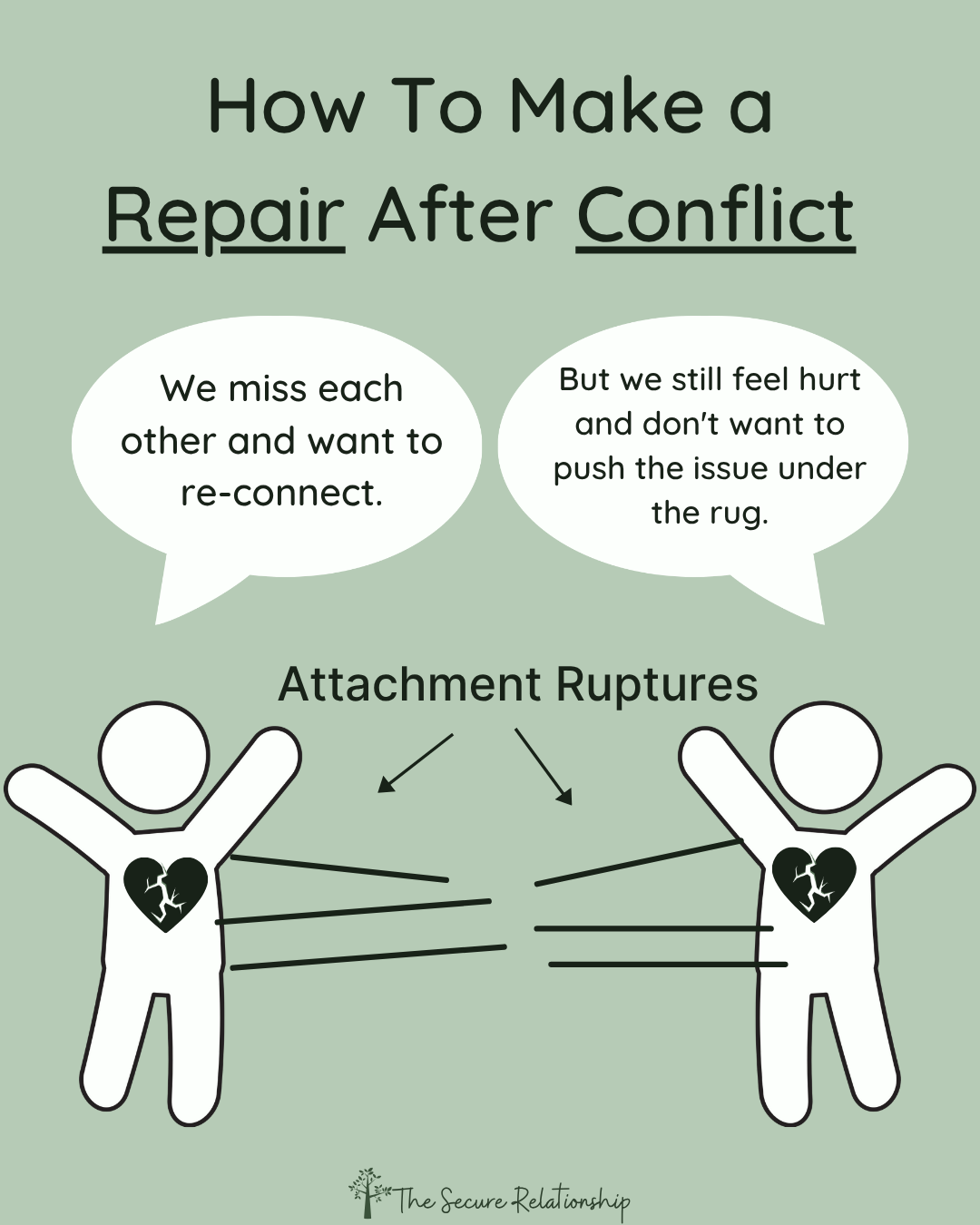
How to Make a Repair After Conflict, Step by Step
A step by step guide to repairing after conflict, opening your heads and hearts, speaking from self, taking turns, making space for both hurts, and problem solving.

What Are Attachment Needs? Anxious vs Avoidant
Attachment needs are wired into us and define emotional safety. Learn what they are, why they matter, and how anxious and avoidant needs differ.
How to Heal From an Insecure Attachment Style
Practical tips to heal from insecure attachment: find attachment-informed therapy, talk to yourself with compassion, address trauma and developmental wounds.
Your Part of Relationship Problems: What You Might Be Missing
It's easy to see your partner's role in relationship problems, but harder to see your own. Explore five patterns, from protest to people-pleasing to blame, and your work.
What Is Vulnerability, and Why Does It Matter in Love?
Vulnerability means sharing your real feelings, thoughts, and desires even at the risk of rejection. Learn what blocks it and how to practice it safely.

Anxious Attachment: What to Do When Your Partner Isn't Changing
You have an anxious attachment and your partner isn't changing. Learn the grief work that helps you show up for yourself, self-regulate, and find calm and empowerment.
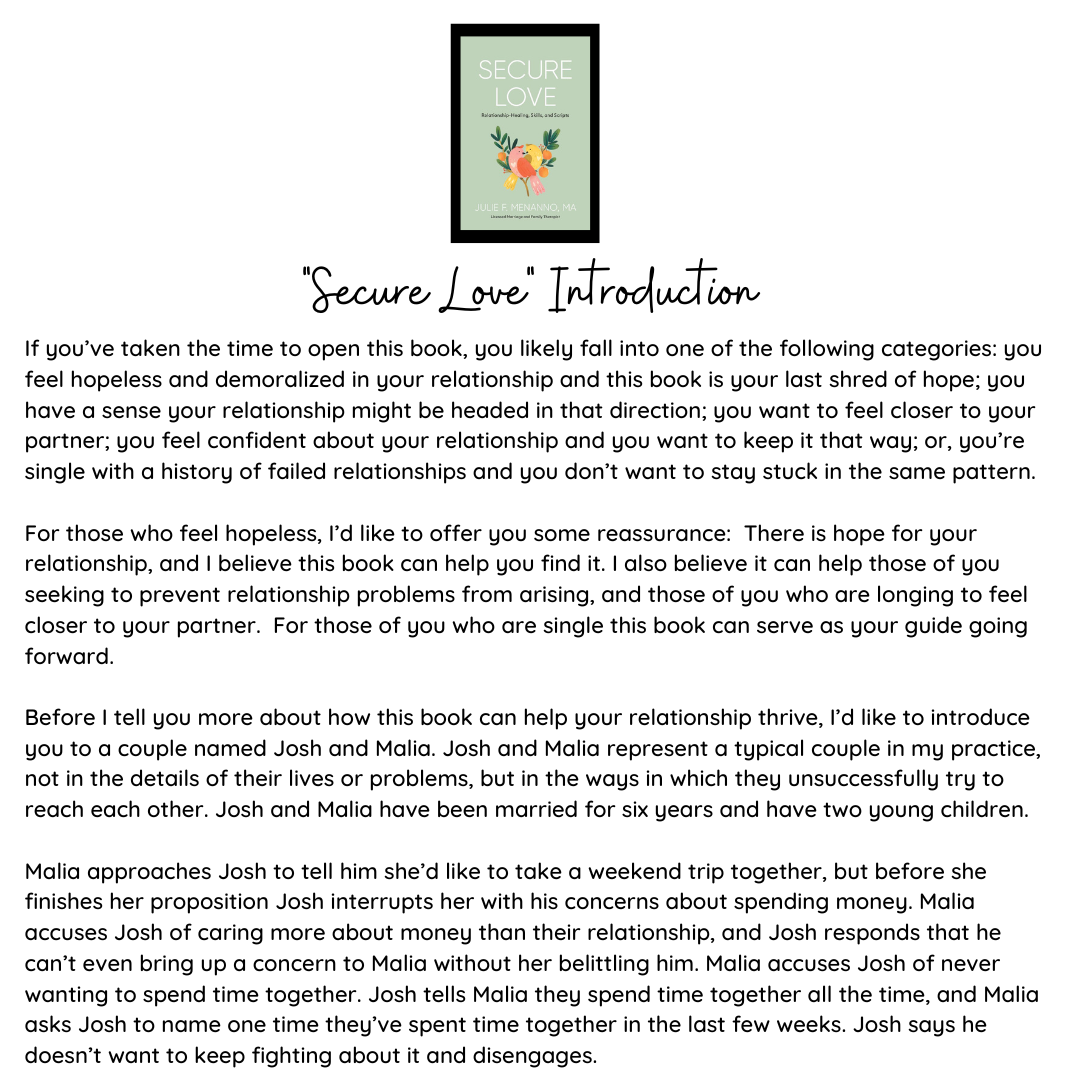
Secure Love: Using Attachment Theory to Heal Your Bond
Julie Menanno introduces Secure Love, her attachment based guide to breaking the negative cycle, healing wounds, and building lasting connection.

Helpful Goals for Each Insecure Attachment Style
Whether you're anxious, avoidant, or disorganized, growth has a direction. Learn the most helpful healing goals for each insecure attachment style.

How Therapy Can Help With an Avoidant Attachment Style
Therapy can help people with avoidant attachment communicate more openly, connect more deeply, and become more emotionally available in relationships.

3 Tips to Help Your Anxious Partner Feel More Secure
Anxious partners feel more secure when their relationship needs are met. Learn three practical ways to support your partner in feeling safe, valued, and emotionally connected.