
Sex and DesireMismatched Libido and Desire in Relationships
If one of you wants sex more than the other, you are not broken and you are not incompatible. Differences in desire are one of the most common and most misunderstood challenges couples face. Learn what really drives desire and how to reconnect, with attachment-based, judgment-free guidance from therapist Julie Menanno.


National Bestselling Book
1.5M+ Followers

1M Podcast Downloads

What is mismatched libido?
Mismatched libido, also called desire discrepancy, is when partners have different levels of sexual desire. It's extremely common and rarely a sign of a real problem with the relationship. Often it reflects the difference between spontaneous desire (wanting sex out of the blue) and responsive desire (desire that builds in response to closeness and touch), rather than one partner wanting the other less.
“Sexual connection provides a uniquely powerful bond between partners.”
Julie Menanno, Secure Love
Does this sound familiar?
One of you wants sex noticeably more than the other, and it's become a sore spot.
Sex has quietly faded, and neither of you knows how to bring it up.
One partner feels rejected; the other feels pressured.
You've started to wonder if something is wrong with you, or with the relationship.
The more it's talked about, the more loaded it feels.
None of this means you're incompatible. Desire differences are normal, and they respond well to understanding.

The foundation
What is responsive desire?
Not everyone experiences desire the same way. Neither style is better or more normal. Many people, and often the lower-desire partner in a couple, experience desire responsively. Understanding this alone resolves a lot of pain, because it reframes "I don't want you" into "my desire needs a different on-ramp."
Spontaneous desire
Spontaneous desire shows up out of nowhere: a thought, an urge, wanting sex before anything has happened. It doesn't need a warm-up, and it's often the version of desire people assume is the only one. Partners who experience desire this way frequently reach for sex as the route to feeling close.
Responsive desire
Responsive desire works the other way around. It builds in response to connection, affection, and touch, once you're already close. There's nothing missing or broken in a responsive partner; the desire is real, it simply arrives after closeness rather than before it.
The loop underneath
Mismatched Libido and Desire Discrepancy
When one partner tends toward spontaneous desire and the other toward responsive desire, you get a discrepancy: one reaches for sex to feel close, the other needs to feel close before reaching for sex. From there it becomes a painful loop.
1
One partner reaches for sex to feel close
For them, physical connection is how reassurance and closeness get restored.
2
The other needs closeness first
Desire hasn't arrived yet, because the connection it responds to hasn't happened.
3
The higher-desire partner feels rejected
A "not tonight" lands as "not you," so they ask more often rather than less.
4
Asking adds pressure
Pressure is the one thing responsive desire cannot build under.
5
Both end up further from what they wanted
The distance grows, and the topic gets more loaded every time it comes up.
Sound familiar? It's the same pursue-withdraw pattern as the emotional negative cycle, just in the bedroom.

Different sex drives in a relationship
Different is the norm, not the exception
Having different sex drives is the norm, not the exception. Desire is affected by stress, sleep, hormones, life stage, resentment, and how emotionally safe you feel with each other. It moves over the course of a relationship, and it rarely moves in step for both people at once.
In secure relationships, partners treat a desire difference as a shared puzzle to understand together, rather than one person's problem to fix. The goal isn't identical desire; it's a sex life that feels mutual, safe, and connected for both of you.
The pattern beneath the pattern
How attachment shapes desire
Your attachment patterns show up in the bedroom too. When both partners understand what's driving them underneath, sex stops being a scoreboard and becomes another place to connect.
Anxious attachment and desire
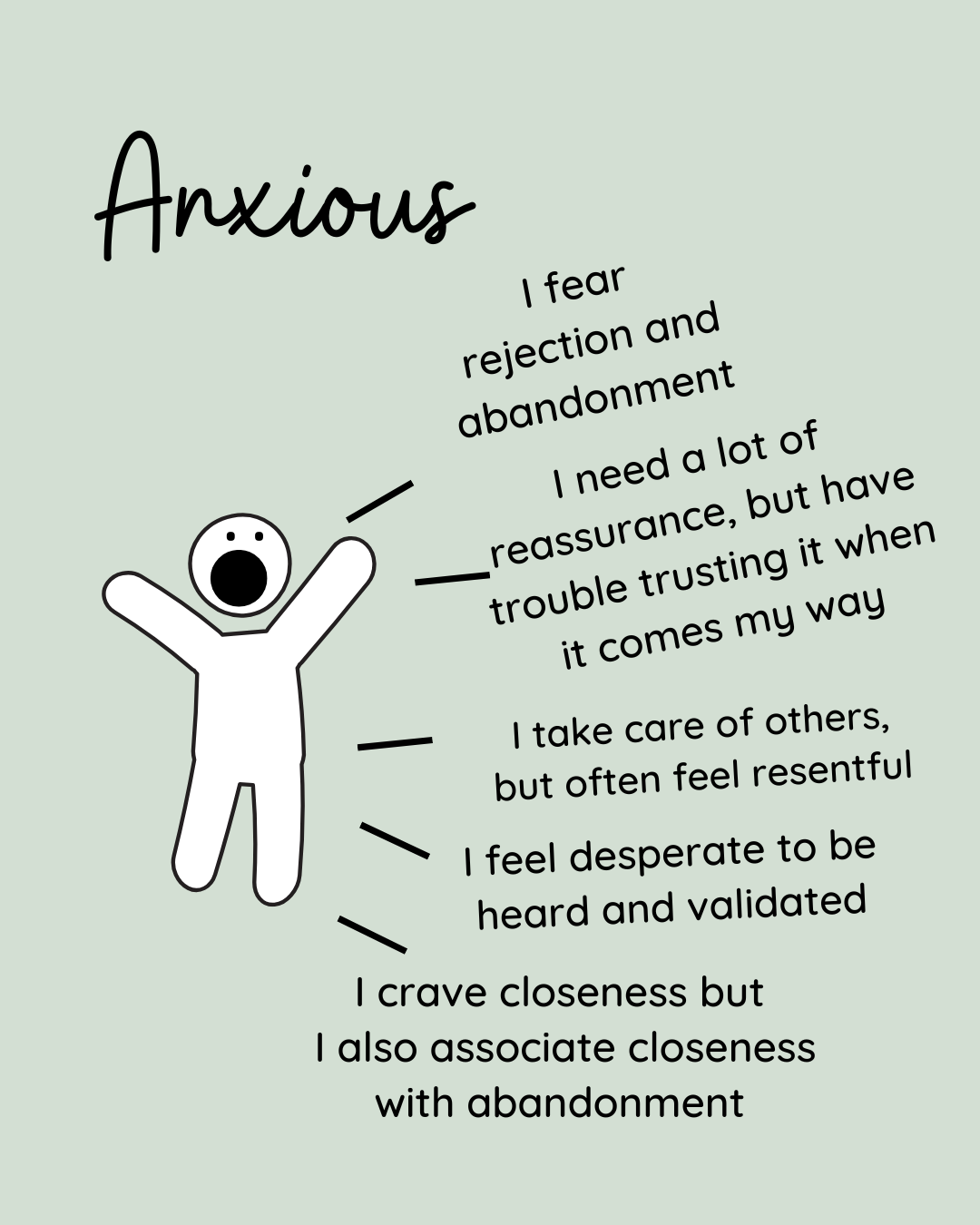
Anxious partners may seek sex for reassurance, using physical closeness to settle a fear that the connection is slipping. A "no" is easy to read as rejection of them rather than of the moment, which raises the stakes on every approach.
Avoidant attachment and desire
Avoidant partners may withdraw from sex when they feel pressure or lack emotional safety. Distance restores a sense of control, but it also removes the closeness that responsive desire depends on.
How we help you reconnect
You can reconnect
Three steps, from free self-understanding to one-to-one support.

1
Understand your patterns
Take the free Attachment Style Quiz to see how you approach closeness in a relationship.

2
Do the deeper work
Our courses help you build the emotional safety that desire depends on.

3
Get support
Work with an attachment-trained coach on reconnecting, without shame or pressure.
Coaching is education and coaching, not sex therapy or medical treatment. If desire changes are sudden or distressing, it's worth speaking with a doctor.
Why The Secure Relationship
Guidance you can trust
The Secure Relationship was founded by Julie Menanno, MA, LMFT, LCPC, a licensed couples therapist whose attachment- and EFT-informed work has reached millions of people looking to feel safe in love again.

Therapist-led and evidence-based
Founded by Julie Menanno, MA, LMFT, LCPC, a licensed couples therapist. Attachment and EFT-informed.
Support for every stage
Free resources, courses, groups, and one-to-one coaching.
A proven approach
The bestseller Secure Love, a 1.5M+ community, 1M+ podcast downloads.

How do you approach closeness under stress?
Take the free Attachment Style Quiz to understand your pattern and what helps you reconnect. About three minutes.
What our community is saying
Real words from people who've used these tools to build more secure relationships.
Work with us
Ready to reconnect, without the pressure?
Self-paced course
$549
or 3 payments
Anxious Attachment: Self-Work Course
Build the secure self-support and emotional safety that closeness and desire depend on. Learn what drives your reaching, what to do with the fear underneath it, and how to steady yourself when a "not tonight" lands harder than it should.
1:1 & group coaching
Work with a coach
Work with an attachment-trained coach on rebuilding desire and emotional safety, individually or as a couple. Or join a supportive group and do the work alongside others walking the same path.
Individual & couples sessions
Attachment-trained coaches
Supportive group option
-
When partners have different levels of sexual desire. It's very common and usually reflects different desire styles rather than a real incompatibility.
-
Desire that builds in response to closeness, affection, and touch, rather than appearing spontaneously. It's completely normal and very common.
-
Another term for mismatched libido: a difference in how much or how readily each partner experiences sexual desire.
-
Yes. Different sex drives are the norm. Desire is affected by stress, hormones, life stage, and emotional safety, and it naturally differs between partners.
-
By understanding each partner's desire style, reducing pressure, rebuilding emotional safety, and treating it as a shared puzzle rather than one person's problem.
Frequently asked questions
Posts about Sex and Desire


If you feel sensitive in relationships, scan for signs of disconnection, or spiral into protest and panic when you don’t feel close, this course is your starting point for healing. In this self-paced course, Julie Menanno guides you through the deeper emotional work required to stop self-abandoning and start showing up for your own needs, so connection can feel safe again. You’ll learn how anxious attachment develops, how it shows up in adult relationships, and how to build secure self-support,
Podcast Episodes
Book an Appointment
When your sexual connection feels strained, mismatched, or hard to talk about, it can impact closeness in every part of the relationship. Work with one of our coaches to build safety, improve communication, and reconnect with more openness and ease.
Having sex regularly can support emotional connection, relationship resiliency, and repair. When sex feels safe, mutual, and connected, it can help couples feel closer, more secure, and better able to move through life’s challenges together.