
Avoidant Attachment Style
If you have an avoidant attachment style, closeness may matter deeply to you while also feeling hard to stay relaxed inside of. This page will help you understand why you pull away, what your nervous system may be protecting, and how to move toward more secure connection without losing yourself.
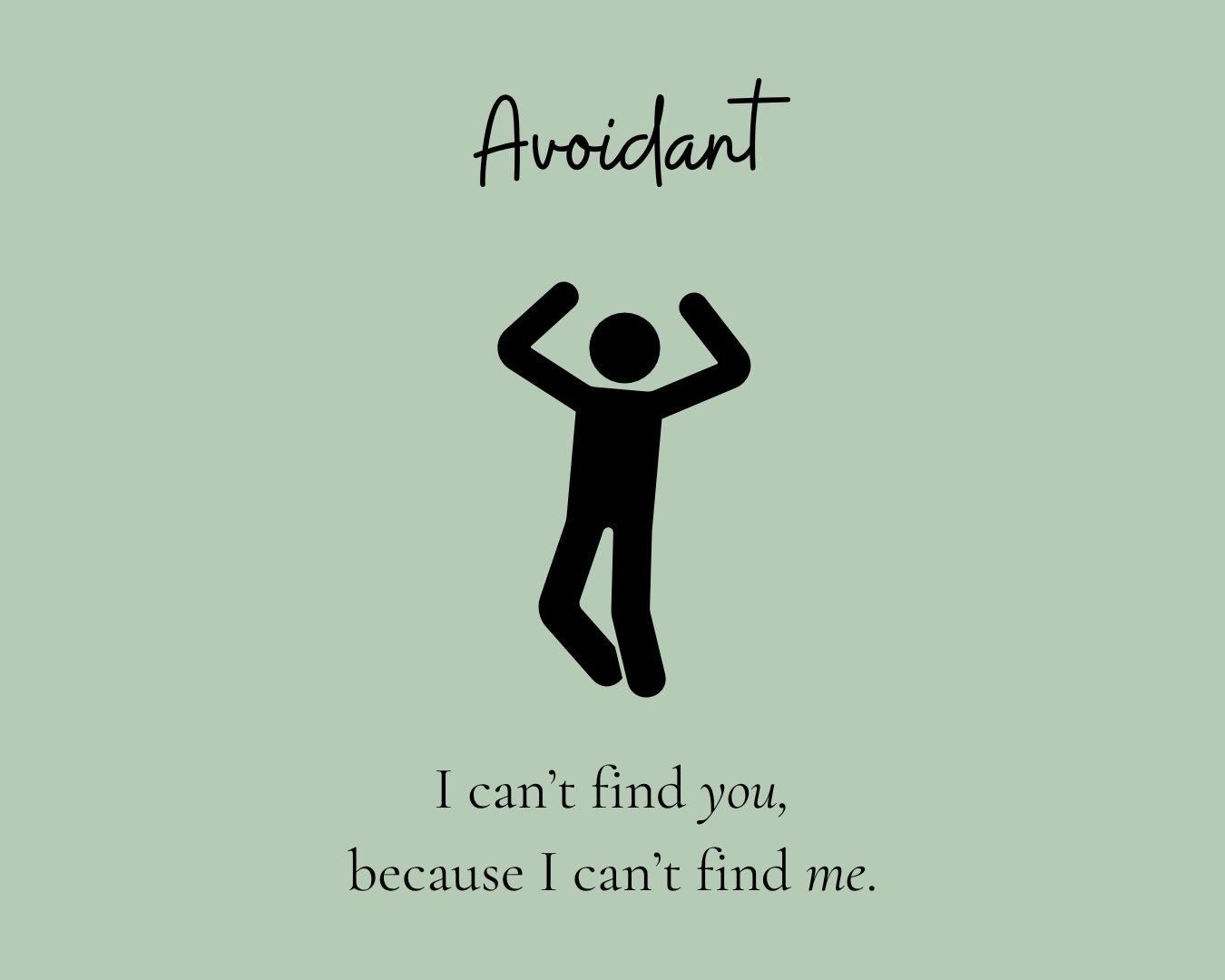
Avoidant attachment is often misunderstood.
From the outside, it can look like distance, detachment, emotional unavailability, or not caring enough. But on the inside, avoidant attachment is often more complex than that. Many people with this pattern care deeply. They may long for connection, loyalty, peace, and love. They also may feel overwhelmed by emotional intensity, pressure, dependence, criticism, or the feeling that someone needs too much from them.
So they protect.
They shut down.
They go quiet.
They turn to logic.
They minimize.
They delay.
They need space.
They focus on fixing instead of feeling.
They pull back when closeness starts to feel demanding.
This page is here to help you understand that pattern with compassion and honesty.
Whether you are trying to understand yourself or an avoidantly attached partner, the goal is not blame. The goal is to understand what the distance is doing, what it is protecting, and what helps create enough safety for real connection.
What is avoidant attachment?
Avoidant attachment is a pattern in which closeness can feel important, but emotionally demanding or hard to sustain.
You may have learned that having needs, showing vulnerability, depending on others, or feeling intensely with someone did not feel safe, welcome, effective, or well received. Because of that, your nervous system may have adapted by becoming more self-reliant, more emotionally contained, and more likely to move away from vulnerability when it starts to feel too exposed.
Avoidant attachment often sounds like:
“I need space to think.”
“I don’t know why this has to be such a big deal.”
“I care, but I shut down when emotions get intense.”
“I don’t want to be controlled.”
“I don’t know what I feel until much later.”
At its core, avoidant attachment is not a lack of need. It is a protection around need.
Posts about Avoidant Attachment





The Negative Cycle Series is a 5-part, step-by-step path to help you understand why you and your partner keep getting pulled into the same fight, and what to do differently when it starts. You will learn how to map your cycle, identify the attachment fears driving it, interrupt it in real time, repair after rupture, and build a more secure relationship dynamic that lasts. This is the work that turns conflict into clarity, and distance into connection.

Common signs of avoidant attachment
You may relate to avoidant attachment if you tend to:
feel overwhelmed when someone wants more emotional closeness than feels manageable
need space when conflict or emotional intensity rises
shut down, go quiet, or become hard to reach when you feel pressured
value independence so much that dependence starts to feel threatening
struggle to identify or express emotions in the moment
feel more comfortable with logic, problem-solving, or action than vulnerability
minimize your own needs or discomfort
feel irritated when a partner wants repeated reassurance or emotional processing
pull back when someone gets too close, needs too much, or seems disappointed in you
care deeply while looking detached on the outside
This does not mean you are cold. It often means closeness and emotional exposure learned to feel costly.
What avoidant attachment can feel like on the inside
From the outside, avoidant attachment can look disconnected. On the inside, it often feels flooded, pressured, ashamed, or trapped.
It can feel like:
“I don’t know how to do this without failing.”
“When emotions get big, my whole system wants out.”
“I care, but I don’t know how to stay open when I feel cornered.”
“I need time, but the more I take time, the worse this gets.”
“If I let you see how much I feel, I might lose control.”
“I don’t want to be the bad guy, but I also don’t know how to give what’s being asked of me.”
Many avoidantly attached people carry shame about how hard closeness feels. They may judge themselves for not being more expressive, more available, or more immediately responsive. Underneath that can be a painful fear of disappointing the people they love.
Why avoidant attachment develops
Avoidant attachment often develops when emotional needs did not feel safe to have, safe to express, or likely to be met well.
Sometimes caregivers were loving in practical ways but emotionally limited. Sometimes feelings were ignored, dismissed, criticized, rushed, or treated as inconvenient. Sometimes vulnerability led to shame, overwhelm, intrusion, or disappointment. Sometimes a child learned that being easy, capable, low-need, and self-sufficient felt safer than reaching.
When a child adapts by relying heavily on themselves and turning down emotional dependence, that strategy can become the adult pattern.
The message underneath often becomes:
“Do not need too much.”
“Do not feel too much.”
“Do not depend too much.”
“Do not let closeness cost you your stability.”
That protection makes sense.
It just may no longer serve the kind of relationship you actually want.
How avoidant attachment shows up in relationships
Avoidant attachment can shape the whole rhythm of a relationship.
You may:
pull away when conflict gets heated
feel criticized when your partner is reaching for connection
get defensive when someone wants emotional responsiveness you do not know how to give quickly
shut down when you feel misunderstood, pressured, or unable to get it right
offer solutions when your partner wants comfort
delay difficult conversations because you do not feel ready
tell yourself it is better not to bring things up
feel relief in distance, then loneliness in the distance you created
miss your partner while still resisting the path back to closeness
This is one reason couples often get stuck in a negative cycle.
One partner reaches harder because they feel alone.
The other pulls back because they feel pressured or inadequate.
The more one pursues, the more the other distances.
The more the other distances, the more the first partner protests.
Then both people feel unseen.
If this is your pattern, the problem is usually not that you do not care. The problem is that closeness and pressure have gotten tangled together in your system.
What avoidant attachment is not
Avoidant attachment is not proof that you are incapable of love.
It is not proof that you are selfish.
It is not proof that you do not have emotions.
It is not proof that you are beyond change.
It is not proof that you do not want connection.
It is an attachment strategy.
It is your nervous system trying to create safety through distance, control, self-reliance, emotional containment, and reduced exposure.
That strategy deserves understanding.
It also may need updating.
What avoidant attachment needs
People with avoidant attachment often need more than being told to “open up” or “just talk about your feelings.” Pressure tends to create more withdrawal, not more openness.
What actually helps is learning to identify the attachment needs underneath the distance.
Often, avoidant attachment needs sound like:
I need emotional space without losing the connection.
I need gentleness instead of pressure.
I need time to process before I can speak clearly.
I need to know I won’t be shamed for struggling.
I need closeness that does not feel engulfing.
I need to feel accepted while I am learning.
I need emotional safety, not emotional force.
I need to know I can be imperfect and still stay connected.
I need help slowing down enough to know what I feel.
I need room to move toward you at a pace my system can tolerate.
The more clearly these needs can be named, the less likely they are to come out as silence, avoidance, or defensiveness.
What protective behavior can look like
When avoidant attachment gets activated, you may not say, “I feel overwhelmed, exposed, and afraid of failing you.”
You may instead:
shut down
go blank
leave the room
say “I don’t know” when there is more underneath
become logical, flat, or dismissive
tell yourself the issue is not that important
delay responding
focus on tasks instead of connection
downplay your partner’s pain because you do not know what to do with it
create distance so you can feel regulated again
This is not usually because you want disconnection.
It is often because your system is saying, “This feels too much, too fast, and I do not know how to stay open.”
The work is not to shame the protection.
The work is to get underneath it.
If you have avoidant attachment, start here
What healing avoidant attachment looks like
Healing does not mean you stop needing space.
It means space no longer becomes your only way to feel safe.
As you grow, you may notice:
less automatic shutdown
more awareness of what you feel in real time
more ability to say “I’m overwhelmed” instead of disappearing
more willingness to stay emotionally present through discomfort
more trust that closeness does not have to become engulfing
more capacity to hear your partner’s pain without collapsing into defensiveness
more ability to return after space
more confidence that vulnerability can be survived
more connection without losing your sense of self
Healing avoidant attachment is not becoming someone who feels everything instantly and perfectly.
It is becoming someone who can remain more reachable, more honest, and more emotionally present.
If your partner has avoidant attachment
If your partner is avoidantly attached, it can be painful to love someone who seems to disappear when connection matters most. Their distance may stir deep loneliness in you.
And still, it helps to understand that pressure often makes the pattern worse.
-
approach with warmth instead of accusation
slow the pace of emotionally charged conversations
be clear and direct instead of vague and escalating
separate your need from criticism
appreciate effort, not just perfection
allow space with structure
ask for return, not indefinite withdrawal
remember that their shutdown is often protection, not indifference
-
“I want closeness, not pressure.”
“I’m not against you. I want us.”
“If you need a minute, that’s okay. I need to know when you’ll come back.”
“I’d rather have one honest sentence than complete shutdown.”
“Can you tell me what is happening inside, even if it’s messy?”
-
cornering
chasing after shutdown
global attacks on character
mocking their pace
using vulnerability as a weapon later
demanding instant emotional fluency
treating space as rejection of you before clarifying what it is
Your avoidant partner is not usually asking for less connection.
Underneath the protection, they are often asking, “Can closeness happen in a way that does not flood me, shame me, or erase me?”
If you are the avoidant partner in an anxious-avoidant cycle
This pairing is very common, and both people usually end up feeling stuck in their worst fears.
One person feels distance and moves closer.
The other feels pressure and moves away.
Each person’s protection confirms the other person’s alarm.
If this is your relationship, the answer is not for you to become instantly more emotionally expressive under pressure. The answer is learning the cycle.
You need to know:
what makes you shut down
what your withdrawal means to your partner
how their pursuit lands in your system
how your distance lands in theirs
how to make space without breaking connection
how to return with more clarity and care
Once the cycle becomes the problem, instead of each other, more safety becomes possible.
Practical tools for avoidant attachment
-
Pause and ask:
What just happened?
What am I feeling in my body?
What am I afraid will happen if I stay open right now?
What do I need in order to stay connected without flooding?
How can I ask for that clearly?
Then try:
“I’m getting overwhelmed and I want to stay connected. I need ten minutes to settle, and then I want to come back.” -
Before going silent or leaving, ask:
Do I need space, or am I protecting against shame, criticism, or inadequacy?
Have I told my partner what is happening inside me?
Can I give structure to the space so it does not feel like abandonment?
-
“My need for space is real.
My protection makes sense.
And I can learn to stay more reachable while I care for my nervous system.”
FAQs
-
Yes. Avoidant attachment can absolutely become more secure. With awareness, gentler emotional practice, clearer communication, and repeated experiences of safe closeness, people can become much more emotionally available and connected.
-
Yes. Many avoidantly attached people love deeply. The struggle is often not love itself. The struggle is tolerating vulnerability, dependence, emotional intensity, and the fear of failing someone in closeness.
-
This is common. Some avoidantly attached people process emotions more slowly, especially when activated. In the moment, the nervous system may prioritize protection over access. Later, once the pressure is gone, feelings become easier to sense.
-
No. Everyone needs space sometimes. The issue is not space itself. The issue is whether space is used in a way that protects regulation while preserving connection, or in a way that leaves disconnection unresolved.
-
That can happen. People are nuanced. You may be mostly avoidant with some anxious activation, or you may have a more mixed pattern. What matters most is understanding what happens in your system when connection feels threatened.
Resources for avoidant attachment
-
![Attachment 101 Course]()
Attachment 101 Course
A strong first step if you want to understand attachment styles, emotional patterns, and why closeness can feel hard even when you care.
-
![The Secure Love Podcast]()
The Secure Love Podcast
A strong resource if you want to hear real attachment dynamics, conflict patterns, shutdown, pursuing, repair, and healing conversations in a grounded way.
-
![Julie’s Group]()
Julie’s Group
A good fit if you want regular teaching, practical exercises, and a slower way of learning secure connection over time.
-
![Understanding Shame Workshop]()
Understanding Shame Workshop
Many avoidantly attached people do not just fear overwhelm. They also carry shame about not knowing how to show up, fear disappointing others, or feel exposed when emotion gets close. This resource helps unpack what is happening underneath the distancing.
-
![Negative Cycle Workshop Series]()
Negative Cycle Workshop Series
Especially helpful if you tend to shut down, go quiet, pull away, or feel overwhelmed in recurring relationship patterns.
Part 1: Mapping Your Negative Cycle
Part 2: Interrupting Your Negative Cycle
Part 3: Repairing After a Negative Cycle or Rupture
Part 4: Healing Attachment Wounds
Part 5: Creating a Secure Relationship Dynamic
-
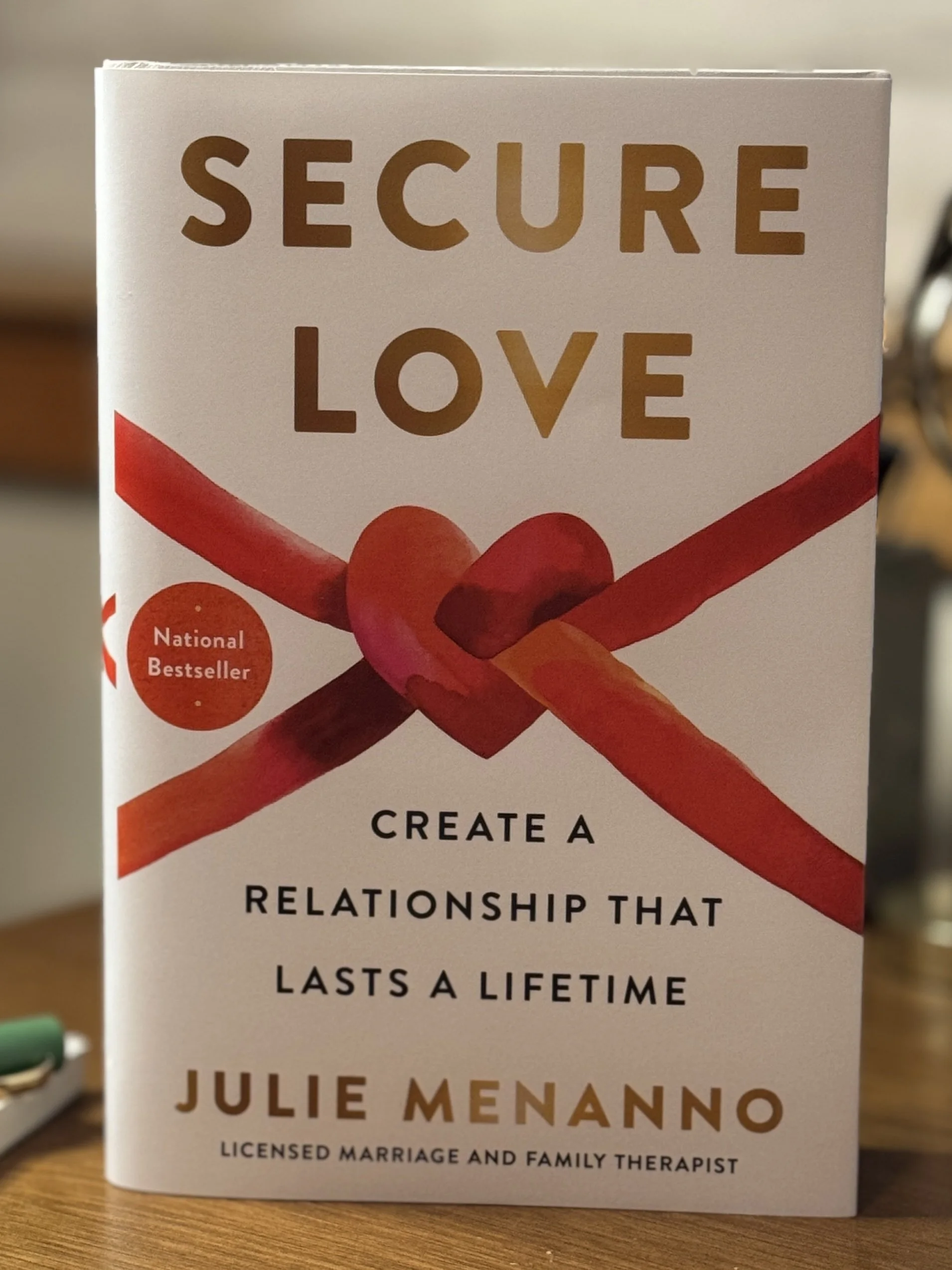
![Secure Love]()
Secure Love
If closeness can feel overwhelming, conflict makes you want to shut down, or you struggle to stay open when emotions run high, Secure Love will help you understand why connection can feel so hard even when you care deeply. It will give you language for what happens inside you, help you recognize the protective patterns that create distance, and show you how to stay present without losing yourself. The book offers a path toward deeper intimacy that feels safer, more manageable, and more genuine.


LET’S GET STARTED
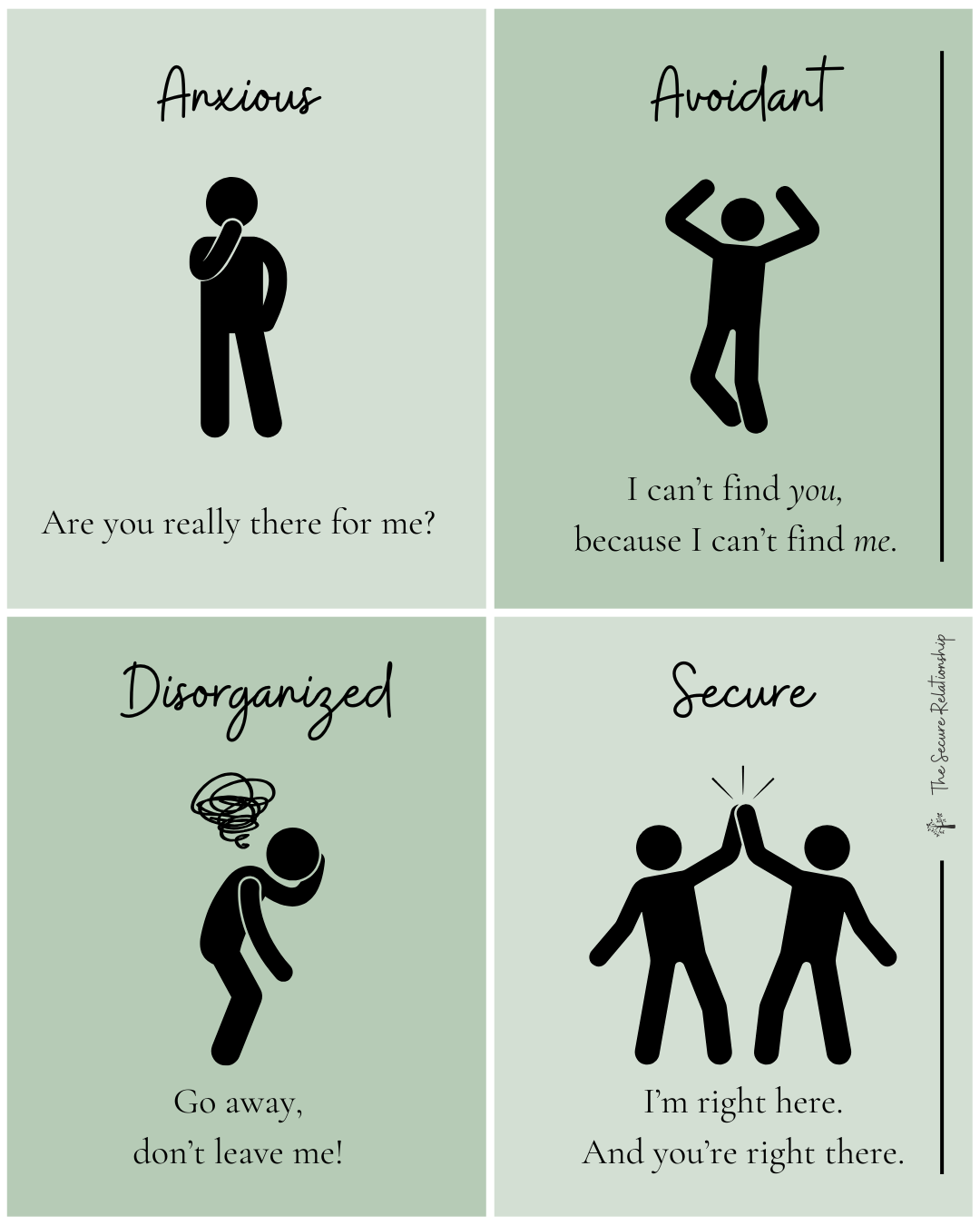
Your attachment style can help you understand how you respond to relationship stress, closeness, conflict, and disconnection. Learn the difference between anxious, avoidant, disorganized, and secure attachment.