
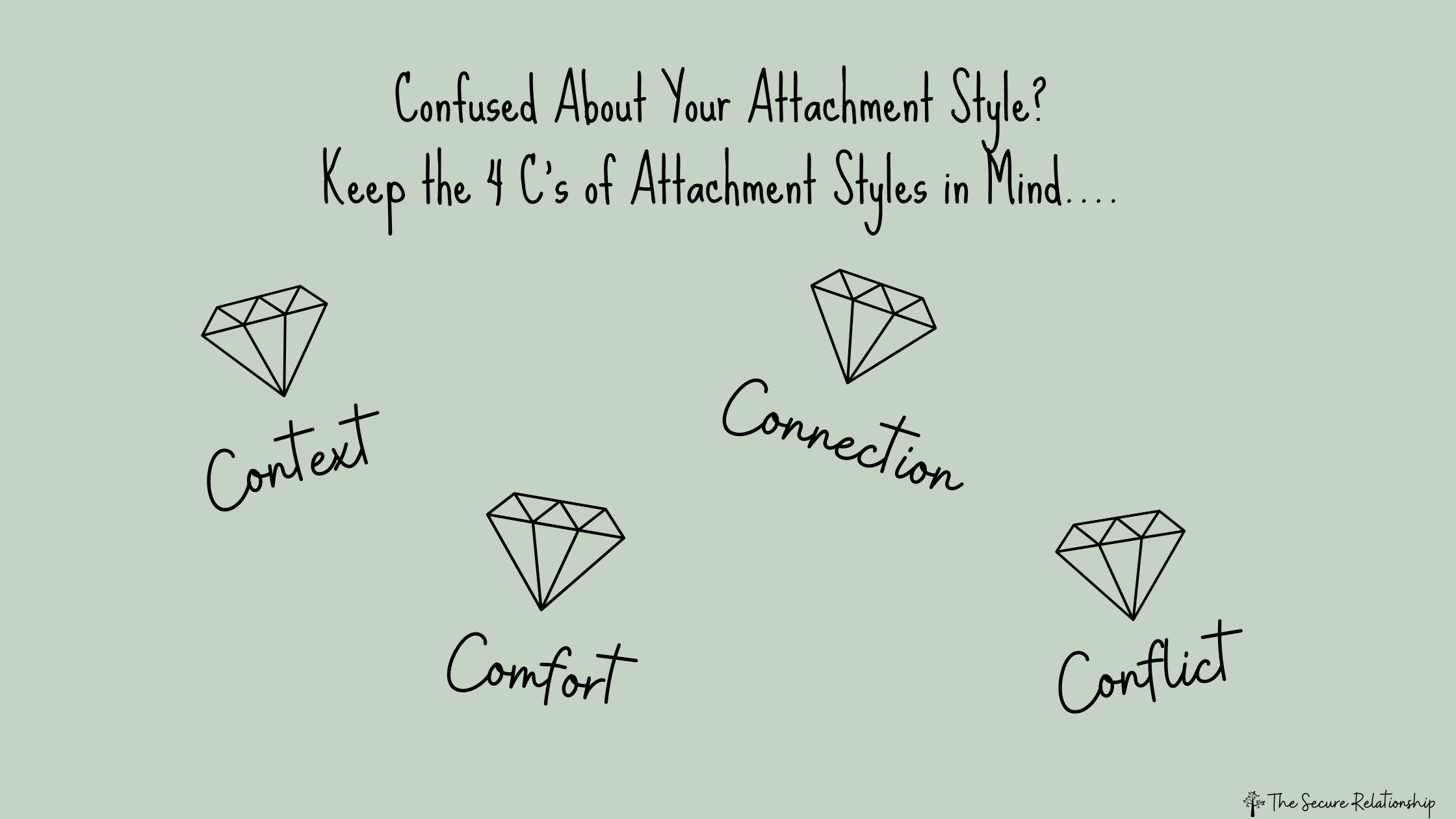
Confused About Your Attachment Style? Keep the 4 C’s of Attachment Styles in Mind…
Understanding your attachment style is crucial for building healthier romantic relationships. By focusing on the 4 C’s of Attachment Styles (Context, Connection, Comfort, and Conflict), you can gain clarity about how you navigate emotional dynamics and identify areas for growth.
First, a quick clarification: “the four attachment styles of love”
When people search “the four attachment styles of love,” they’re usually referring to these four patterns in romantic relationships:
Secure
Anxious
Avoidant
Disorganized
These styles tend to show up most clearly when the relationship matters deeply, when you feel uncertain, or when conflict hits. That’s exactly why the 4 C’s below are so helpful: they give you a practical way to understand how your attachment style shows up in real life, not just as a definition on the internet.
What people mean when they say “attachment issues”
“Attachment issues” is a broad phrase, but most of the time it means:
My nervous system does not feel safe in closeness, distance, or conflict, and I keep reacting in ways I don’t fully understand.
Attachment “issues” are rarely about being “too much” or “not enough.” They’re usually about protection:
Protecting yourself from rejection
Protecting yourself from feeling powerless
Protecting yourself from needing someone who might not show up
The goal isn’t to judge your pattern. It’s to understand it, so you can change it.
Now let’s get into the framework.
1. Context: Where Attachment Styles Matter Most
Attachment theory explains how early relationships with caregivers shape feelings and behaviors in high-stakes connections later in life, particularly romantic relationships. While attachment styles can influence other relationships, applying them to casual friendships or family ties can cause confusion because these connections often carry different emotional expectations.
Focus Tip:
To understand your attachment style, examine how you show up in romantic relationships during stressful or high-stakes moments. If you’re not currently in a relationship, reflect on past relationships with moderate to high levels of commitment.
2. Connection: How Attachment Styles Shape Emotional Bonds
Avoidant Attachment
Avoidant partners connect through actions and thoughts, often neglecting emotions. They struggle with vulnerability, which limits deeper intimacy.
Challenge: Talking about feelings can feel awkward or intrusive.
Anxious Attachment
Anxious partners often confuse enmeshment with connection. Their hyper-vigilance to potential issues can block genuine intimacy.
Challenge: Emotional over-monitoring prevents a true bond.
Disorganized Attachment
Disorganized partners have difficulty trusting and feeling safe. They oscillate between seeking enmeshment and total disconnection.
Challenge: Emotional swings limit consistent connection.
Secure Attachment
Secure partners balance thoughts and emotions. They embrace vulnerability and handle both positive and negative emotions, leading to deeper trust and intimacy.
Strength: They are emotionally available and reliable.
If you’re reading this and thinking, “I don’t feel like any one style all the time,” you’re normal. Most people have a primary pattern, and it becomes strongest when they feel threatened, unseen, or uncertain.
3. Comfort: Offering and Receiving Emotional Support
Anxious Attachment
Anxious partners struggle with self-regulation and often seek control to feel better. They may find it hard to accept comfort when it’s offered.
Challenge: Emotional distress can feel overwhelming.
Avoidant Attachment
Avoidant partners are often unaware of emotional needs and may feel inadequate when expected to provide comfort. This can lead to defensiveness or shutdown.
Challenge: Comfort feels unnatural and intimidating.
Disorganized Attachment
Disorganized partners experience intense emotional distress and often have difficulty trusting comfort. Their push/pull dynamic complicates emotional regulation.
Challenge: Inconsistent communication about needs.
Secure Attachment
Secure partners are confident in both seeking and offering comfort. They can self-regulate and provide emotional support when needed.
Strength: They create a safe, nurturing emotional environment.
A helpful reframe: Comfort isn’t just “being nice.” Comfort is co-regulation. It’s how a relationship becomes a place your body can settle.
4. Conflict: Navigating Disagreements
Avoidant Attachment
Avoidant partners avoid conflict, often letting small issues build up until they escalate. They may resort to appeasement, deflection, or defensiveness, leaving issues unresolved.
Challenge: Avoidance fuels negative cycles.
Anxious Attachment
Anxious partners address concerns immediately and intensely, seeking quick resolution. Their urgency often escalates conflict cycles.
Challenge: Blame and intensity lead to invalidation.
Disorganized Attachment
Disorganized partners handle conflict with less predictability, often displaying extreme emotional reactions.
Challenge: Intense emotions overwhelm constructive resolution.
Secure Attachment
Secure partners approach conflict without blame. They focus on emotional safety and problem-solving, maintaining respect even during disagreements.
Strength: They foster resolution without losing connection.
If conflict is where you feel the most “stuck,” that’s not a character flaw. It usually means your attachment system is activating, and you’re defaulting to protection.
A research note (for the “attachment dispositions / emotional competencies / couple satisfaction” query)
Researchers often use the term attachment dispositions to describe your underlying attachment tendencies (like avoidance or anxiety). And they consistently find that relationship satisfaction is not only linked to attachment style, but also to emotional skills, things like emotional awareness, regulation, and how you communicate emotions under stress.
In other words: the more emotionally skilled and emotionally safe a relationship becomes, the less power insecure attachment patterns have.
Resources for Understanding and Growing
If you’re unsure about your attachment style, take the Attachment Style Quiz included in our Attachment 101 Course. It helps you identify your patterns and gives you practical tools to move toward secure attachment.
More ways to go deeper:
FAQ
-
The 4 C’s are Context, Connection, Comfort, and Conflict. They help you spot how your attachment style shows up in real moments, especially in romantic relationships.
-
Most people mean secure, anxious, avoidant, and disorganized attachment styles in romantic relationships.
-
Usually it means your nervous system struggles to feel safe with closeness, distance, or conflict, so you default to protective patterns (pursuing, shutting down, swinging between both, or avoiding vulnerability).
-
Yes. With awareness, better emotional skills, and repeated experiences of safety (with yourself and others), attachment patterns can become more secure over time.
-
Because one partner often moves toward connection when scared (anxious) while the other moves away to regulate (avoidant). Without understanding the cycle, both partners interpret the other’s protection as rejection or control.
