
Attachment Based Relationship Tips
Looking to strengthen your relationship? Our blog offers expert relationship tips rooted in attachment theory and Emotionally Focused Therapy. Learn how to identify your attachment style, communicate more effectively, and foster emotional safety with your partner. From overcoming conflict to building deeper trust, our practical advice and tools, created by couples therapist Julie Menanno, are designed to help you move toward a secure and fulfilling connection. Dive in and start transforming your relationships today!

Anxious Attachment, Codependency, and the Work of Healing
Anxious attachment and codependency are not flaws or weaknesses. They are nervous system strategies developed to manage pain and feel safe. Healing begins when feelings are allowed instead of acted out.
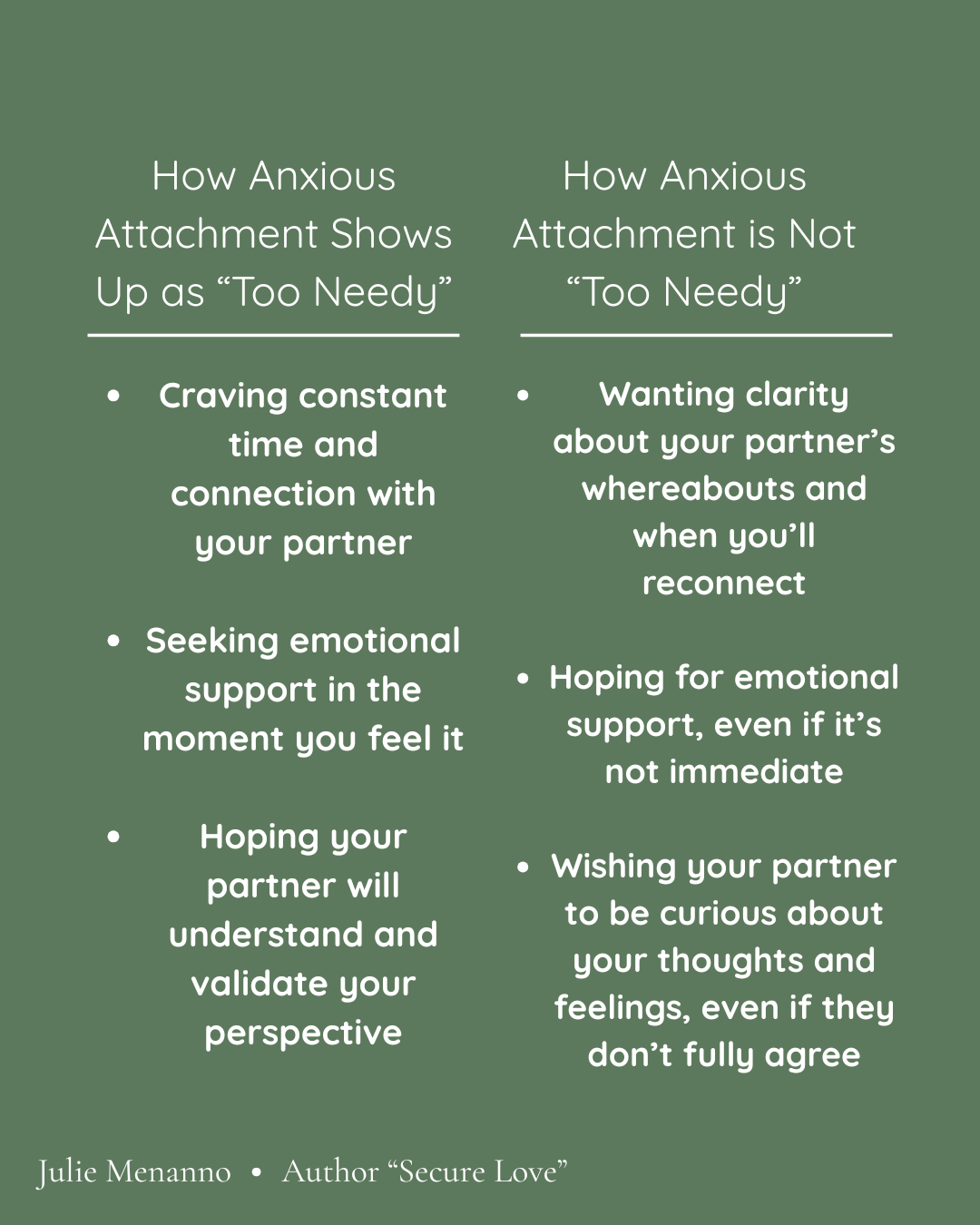
How Anxious Attachment Shows Up as “Too Needy” (and Why It’s Not)
Anxious attachment is often misunderstood as neediness. In reality, it reflects unmet attachment needs for clarity, emotional responsiveness, and connection. Understanding this difference is key to building secure relationships.
Get Secure Relationship resources and insights, delivered weekly.
VIDEOS
VIDEOS

In this week’s group, Julie dives into healing attachment wounds and why old pain can make “small” moments feel huge. She breaks down what an attachment wound really is: not just a big event, but often a thousand paper cuts of emotional abandonment that teach your nervous system, “My needs won’t be met.”
You’ll learn Julie’s layered model for why conflicts escalate: the original issue, the unmet need underneath it, the relationship wound that adds fear and grief, and the childhood echoes that make the present feel like the past. Julie then walks through the three essentials for healing: healing conversations (focused on impact, not intention), new behaviors (because trust requires new experiences), and time (because your nervous system has its own timeline).
During the Q&A , we learn how to do grief work for childhood wounds, what “re-parenting” can look like in a way that feels authentic, and how to stay with emotional pain without getting flooded.