
Attachment Based Relationship Tips
Practical, attachment-based tools from therapist Julie Menanno. Understand your patterns, calm the conflict, and build real emotional safety with your partner.
Browse by topic
New here? Start with these



What Is Attachment Theory? The 4 Attachment Styles in Relationships
Attachment theory helps explain why some relationships feel safe, connected, and easy to repair, while others feel stuck in the same painful cycle. In adult relationships, attachment shows up in what triggers us, how our bodies react to disconnection, and the strategies we use to get safe again. Understanding attachment can help you stop seeing your partner as the enemy and start seeing the real problem more clearly.
What Makes a Relationship Thrive (and What Makes It Fail)
Most relationships don’t break because love disappears. They break because emotional safety disappears—usually through unmet attachment needs, unhealed wounds, and negative cycles that keep partners from finding each other again.

Anxious Attachment, Codependency, and the Work of Healing
Anxious attachment and codependency are not flaws or weaknesses. They are nervous system strategies developed to manage pain and feel safe. Healing begins when feelings are allowed instead of acted out.
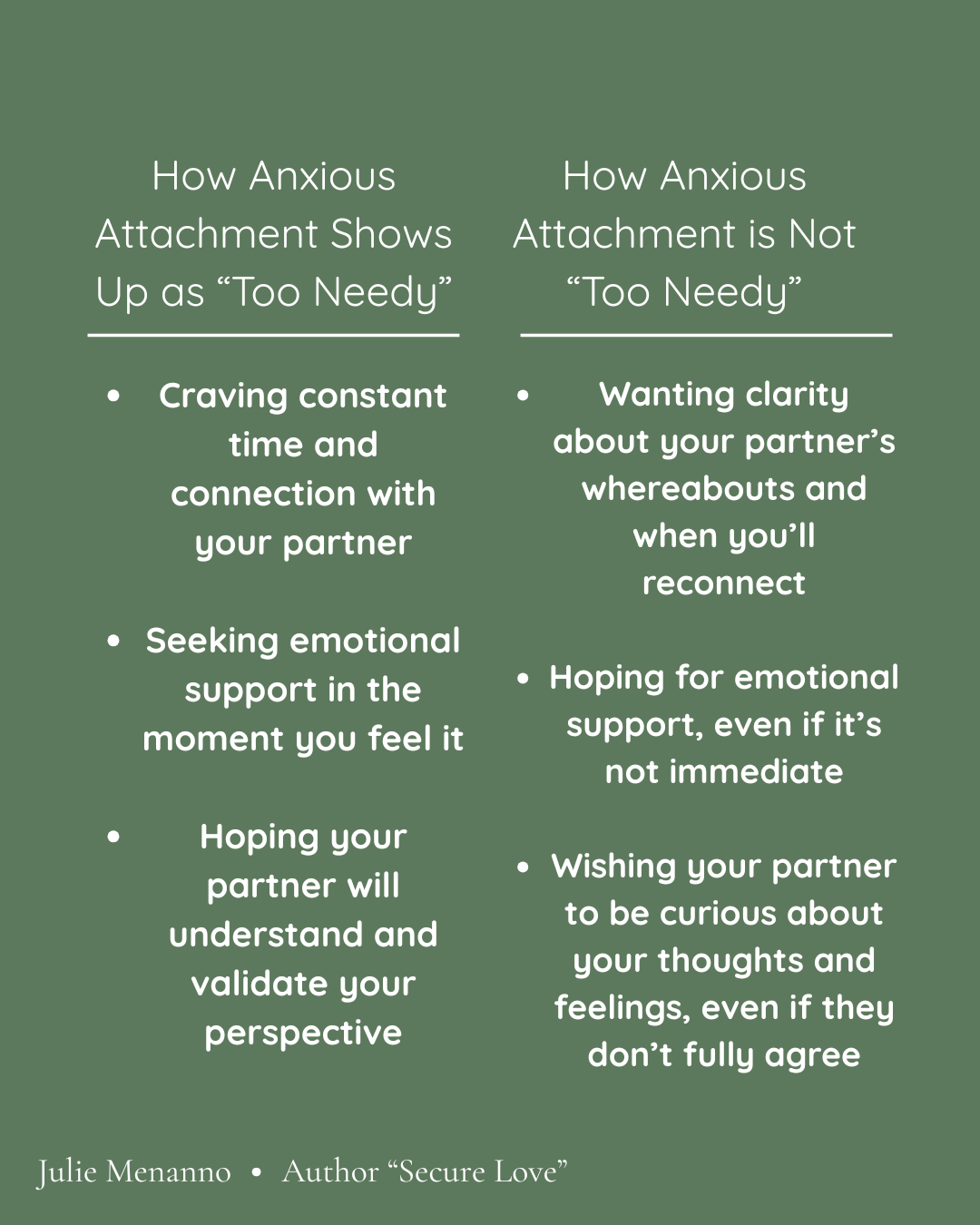
How Anxious Attachment Shows Up as “Too Needy” (and Why It’s Not)
Anxious attachment is often misunderstood as neediness. In reality, it reflects unmet attachment needs for clarity, emotional responsiveness, and connection. Understanding this difference is key to building secure relationships.

Introduction to Emotionally Focused Couples Therapy
Emotionally Focused Couples Therapy (EFT) helps partners break negative cycles and build secure bonds using the science of attachment. Learn how EFT works and why it’s so effective.

Do You Really Want to Be Agreed With? Or Do You Just Want to Feel Valued and Understood?
Constantly arguing over facts in your relationship? You may not be seeking agreement—you may be seeking emotional validation. Here’s how to tell the difference and reconnect.

Your Attachment Style Has So Much to Say…
Each attachment style holds a story—about fear, need, and connection. When we give those stories words, we begin the process of healing, connection, and secure attachment.

If You’re Struggling with Emotional or Relational Pain, Start Here
If you’re navigating CPTSD, attachment wounds, anxiety, or trauma, this book may change your life. Complex PTSD: From Surviving to Thriving by Pete Walker offers powerful tools for emotional healing and recovery.

Insecure Attachment Styles and How They Keep You Stuck
Anxious, avoidant, and disorganized attachment styles often keep partners stuck in negative cycles. Learn how to break free by improving communication, self-awareness, and emotional regulation.

Tips for Healing an Insecure Attachment
Learn how to heal an insecure attachment by improving communication, regulating emotions, and building a healthier sense of self.