Attachment Based Relationship Tips
Looking to strengthen your relationship? Our blog offers expert relationship tips rooted in attachment theory and Emotionally Focused Therapy. Learn how to identify your attachment style, communicate more effectively, and foster emotional safety with your partner. From overcoming conflict to building deeper trust, our practical advice and tools, created by couples therapist Julie Menanno, are designed to help you move toward a secure and fulfilling connection. Dive in and start transforming your relationships today!
The Core Difference Between Anxious and Avoidant Attachment
Anxious and avoidant attachment styles may appear completely different, but they share the same core problem: insecurity and avoidance of painful feelings. Understanding this difference is key to healing and building secure attachment.
Interrupting Your Negative Cycle: Chapter 5 (Part 1) of the Secure Love Book Club
In Part 1 of Chapter 5, we explore what it takes to interrupt your negative cycle in the moment. Julie shares how to slow down, name the pattern, and choose connection over protection—even when it’s hard.
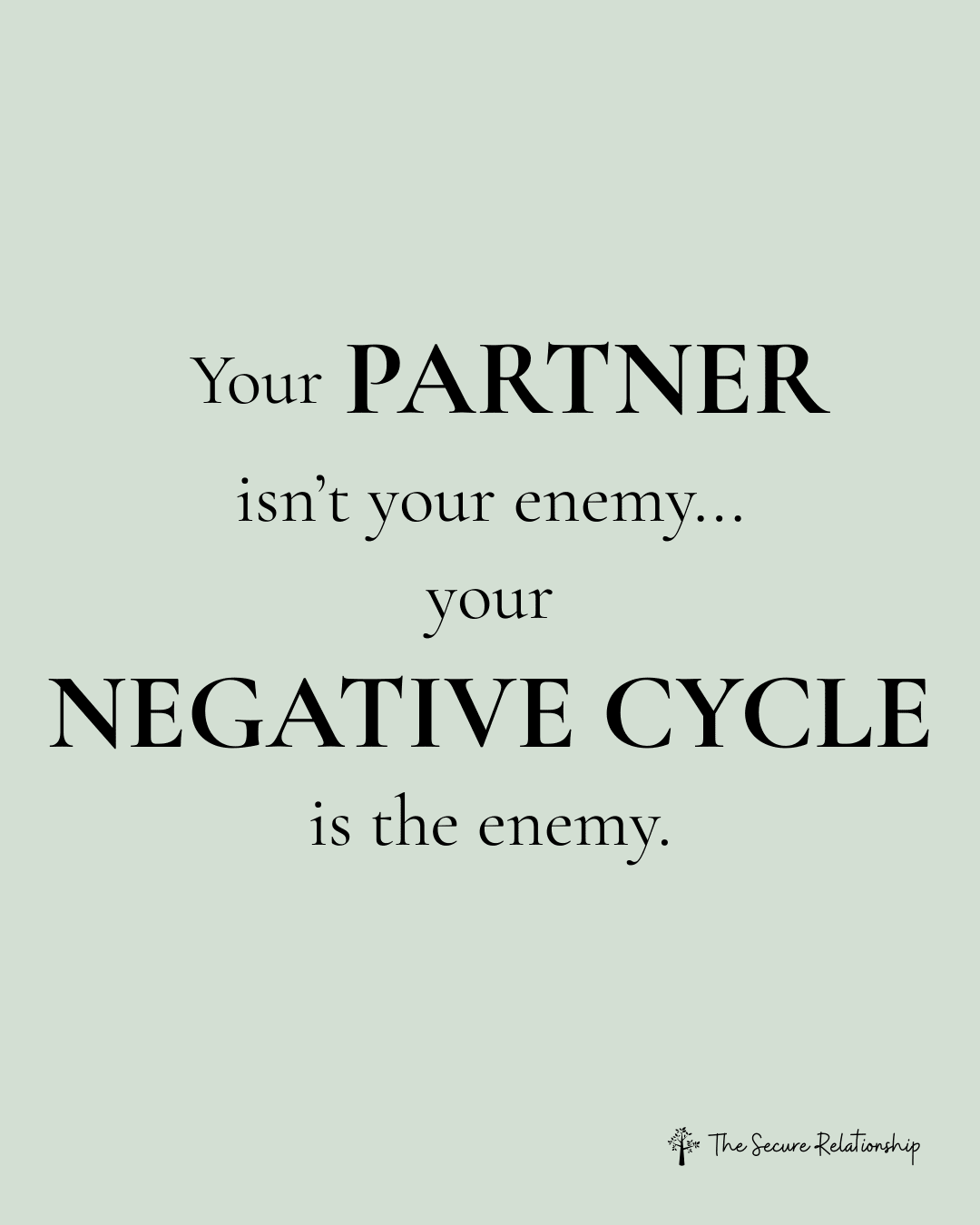
Your Partner Isn’t the Enemy—Your Negative Cycle Is
In emotionally stuck relationships, your partner isn’t the enemy. The negative cycle is. Learn how to identify the cycle, understand each other’s roles, and begin the process of healing.
The Negative Cycle: Part Four – Examining the Next Trigger of the Anxious Partner
When anxious partners feel dismissed, they often double down in protest. It’s not about control—it’s about emotional survival and the fear of being too much to love.
The Negative Cycle: Part Two – Examining the Trigger
The anxious partner in a negative cycle isn’t just “overreacting”—they’re fighting to feel seen, heard, and emotionally safe. Here’s what’s happening beneath the surface.
Why Do Those with Anxious Attachment Do That?
Anxious attachment behaviors often stem from deep fears of abandonment. Learn why these behaviors feel safe and how to shift toward healthier relationship patterns.

In this week’s group, I dove into identity loss in relationships and how we can slowly disappear in the service of “keeping the connection safe.” If you have ever felt like you’ve become a quieter version of yourself, edited your needs, or organized your whole life around keeping the relationship stable, this session will land.
We talked about how shame and early attachment learning can wire the nervous system to prioritize safety over authenticity, and why that strategy can feel protective in the short term but quietly blocks the closeness you are actually longing for. You will also hear how identity loss fuels hypervigilance, anxiety, and negative cycles, even when your partner is not asking you to shrink.
A portion of the meeting focused on the difference between denying your needs to keep the peace versus owning your needs while recognizing a partner may not be able to meet them.
Individual Exercise
How To Rebuild Your Identity
Couple’s Exercise